Alex and the Moon Map
A fictional example created with AI: 20 original digital pages in Spanish, with a complete English text translation below, inspired by Apollo 11. Alex is an invented character, not a family testimonial.
Read the complete English translation
An English translation of the text on all twenty pages, which you can select or read with a screen reader. The original illustrated pages below remain in Spanish.
Page 1 of 20
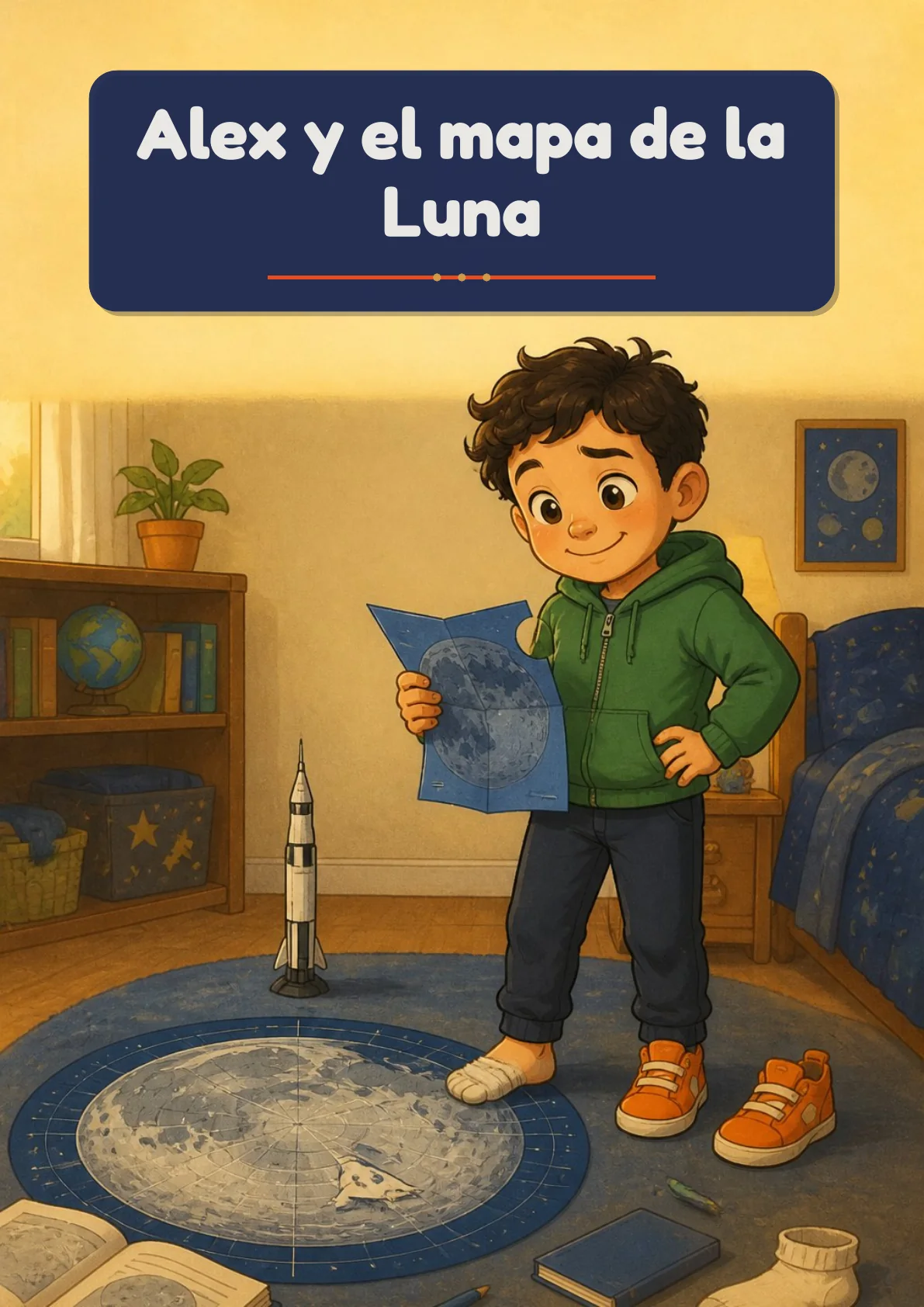
Alex and the Moon Map
Page 2 of 20
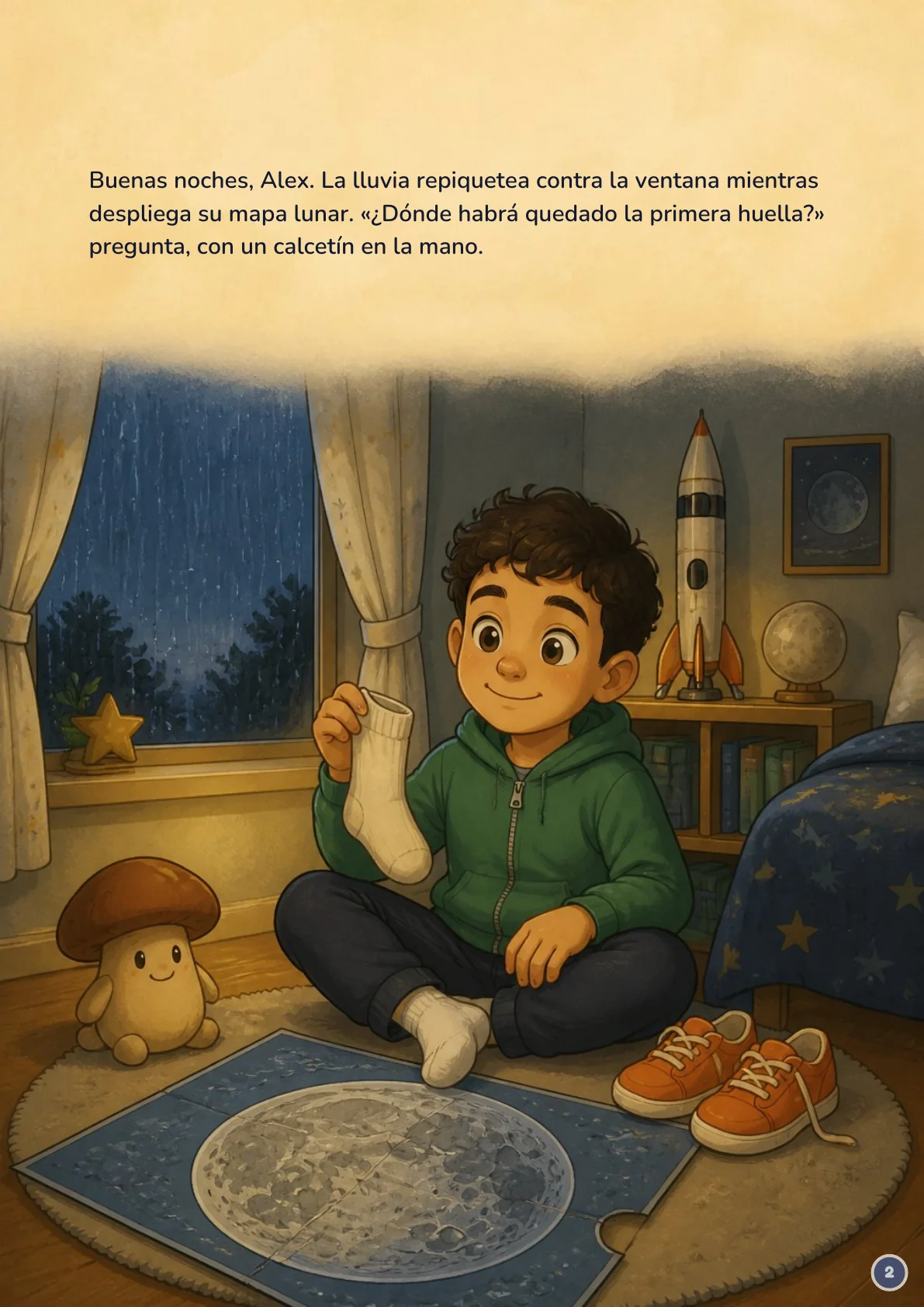
Good night, Alex. Rain patters against the window as Alex unfolds a map of the Moon. “Where was the first footprint left?” Alex asks, holding a sock.
Page 3 of 20
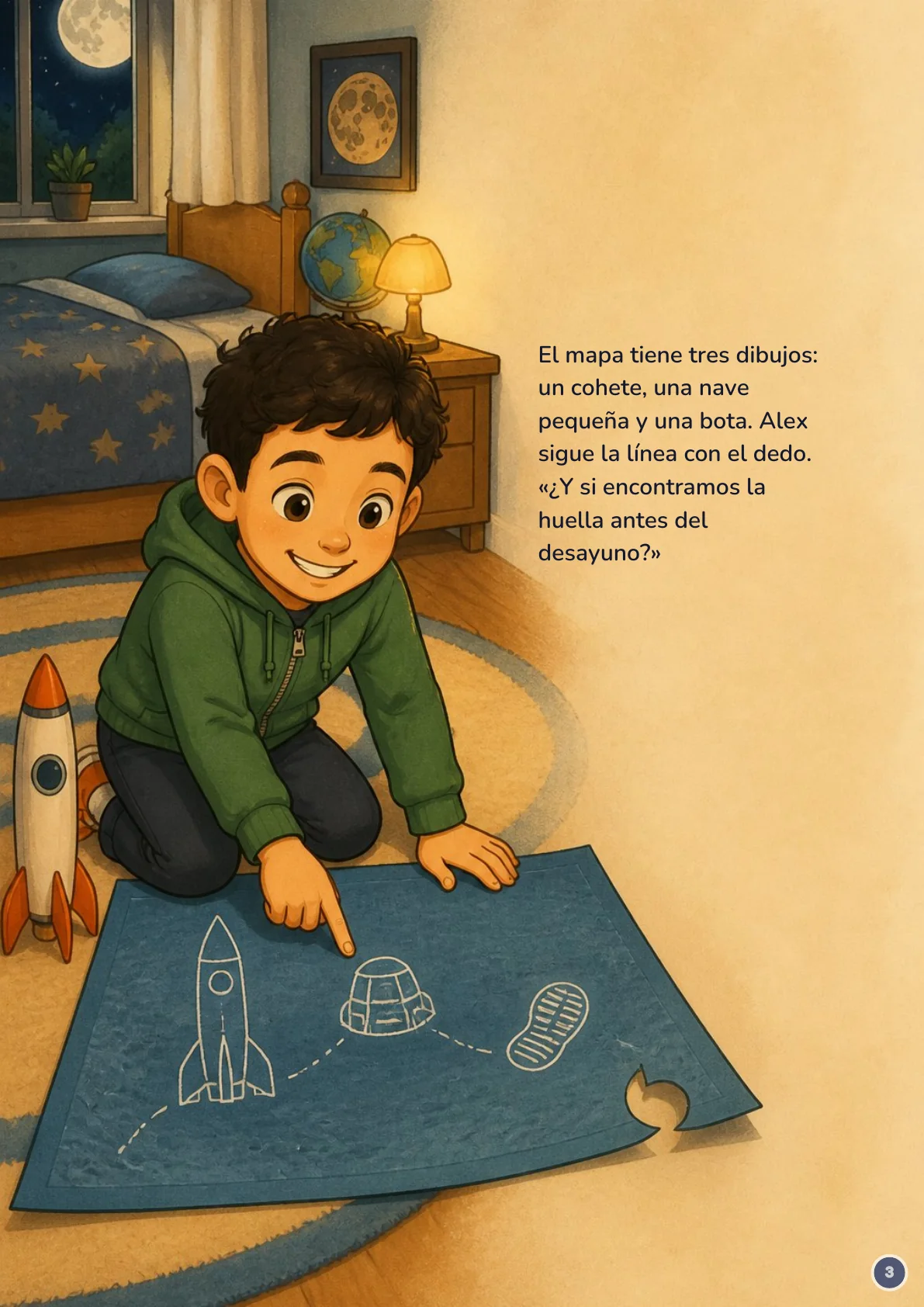
The map has three pictures: a rocket, a small spacecraft and a boot. Alex follows the line with a finger. “What if we find the footprint before breakfast?”
Page 4 of 20
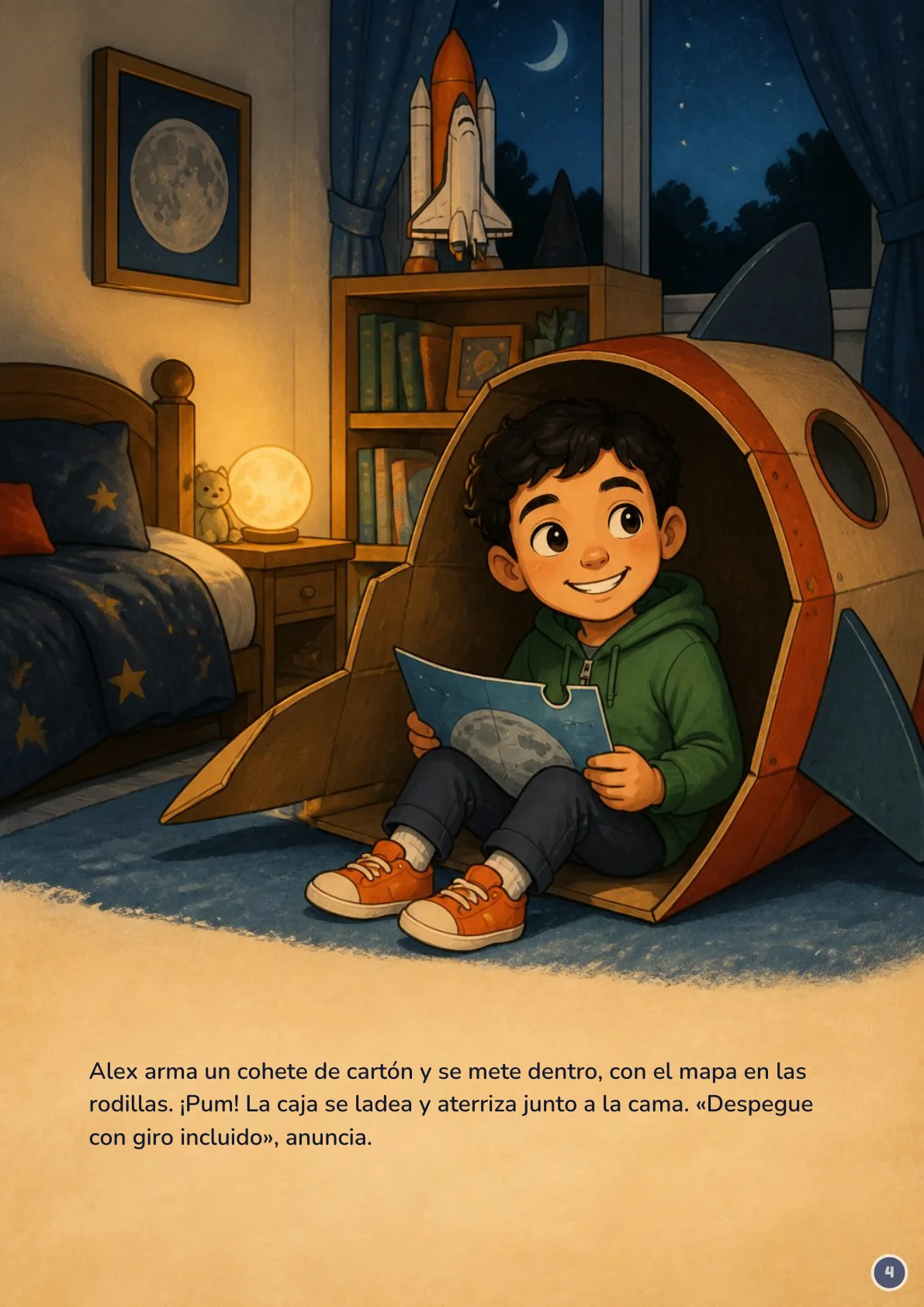
Alex builds a cardboard rocket and climbs inside, with the map on their knees. Bang! The box tilts and lands beside the bed. “Lift-off with a spin included,” Alex announces.
Page 5 of 20
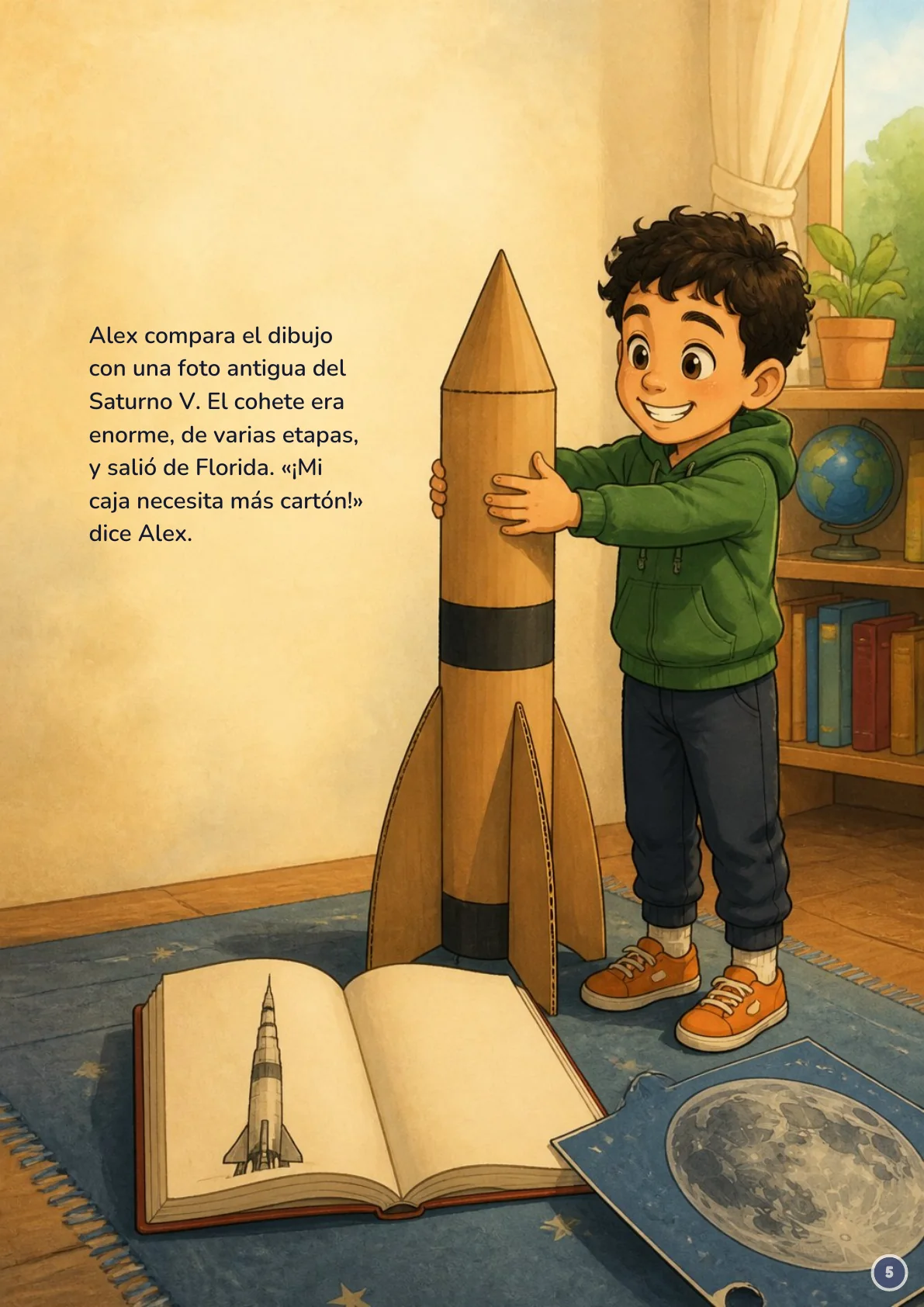
Alex compares the drawing with an old photograph of the Saturn V. The rocket was enormous, had several stages, and launched from Florida. “My box needs more cardboard!” Alex says.
Page 6 of 20
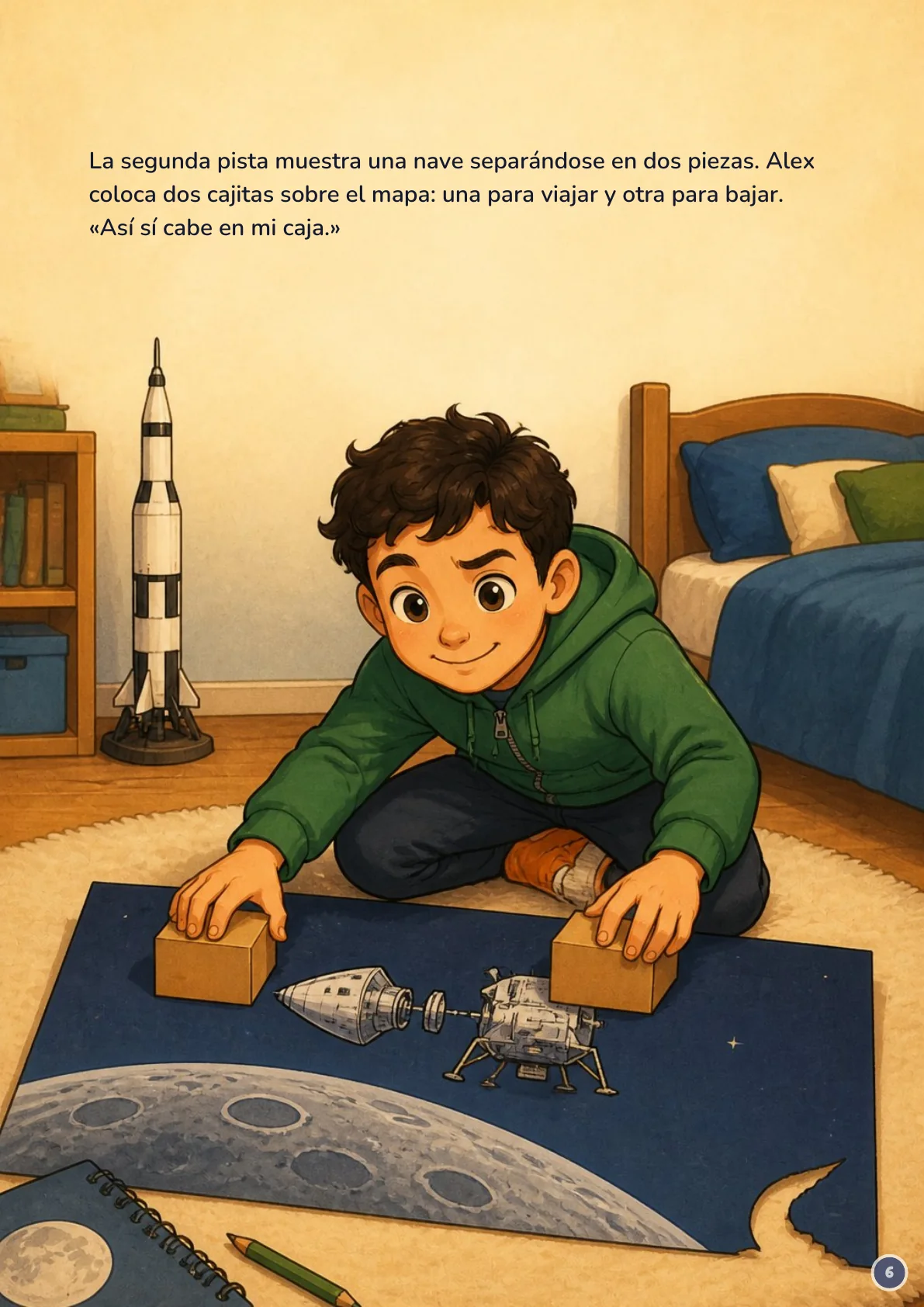
The second clue shows a spacecraft separating into two pieces. Alex puts two little boxes on the map: one for travelling and another for landing. “Now it fits inside my box.”
Page 7 of 20
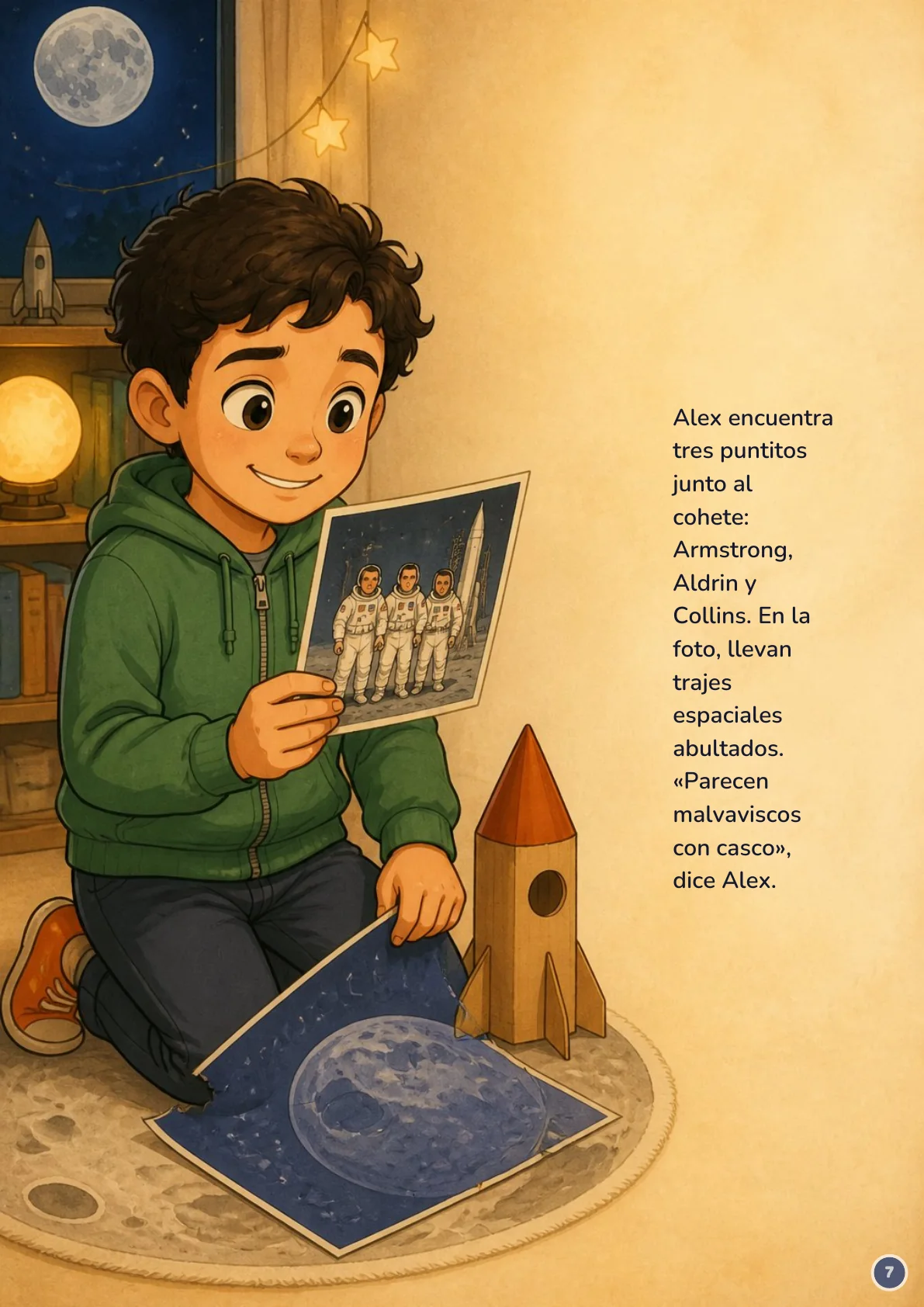
Alex finds three little dots beside the rocket: Armstrong, Aldrin and Collins. In the photograph, they are wearing bulky spacesuits. “They look like marshmallows in helmets,” Alex says.
Page 8 of 20
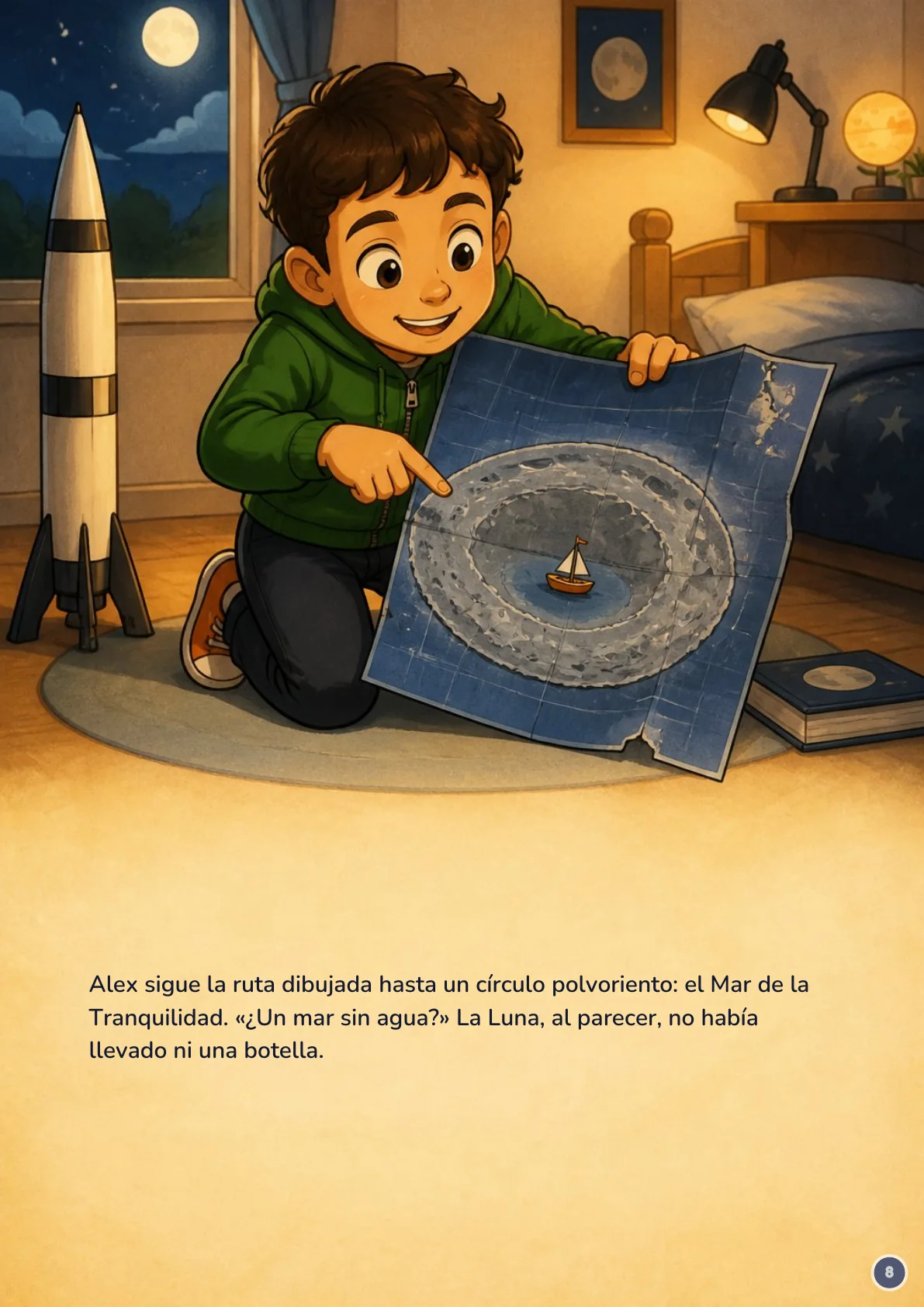
Alex follows the drawn route to a dusty circle: the Sea of Tranquility. “A sea without water?” Apparently, the Moon had not brought even a single bottle.
Page 9 of 20
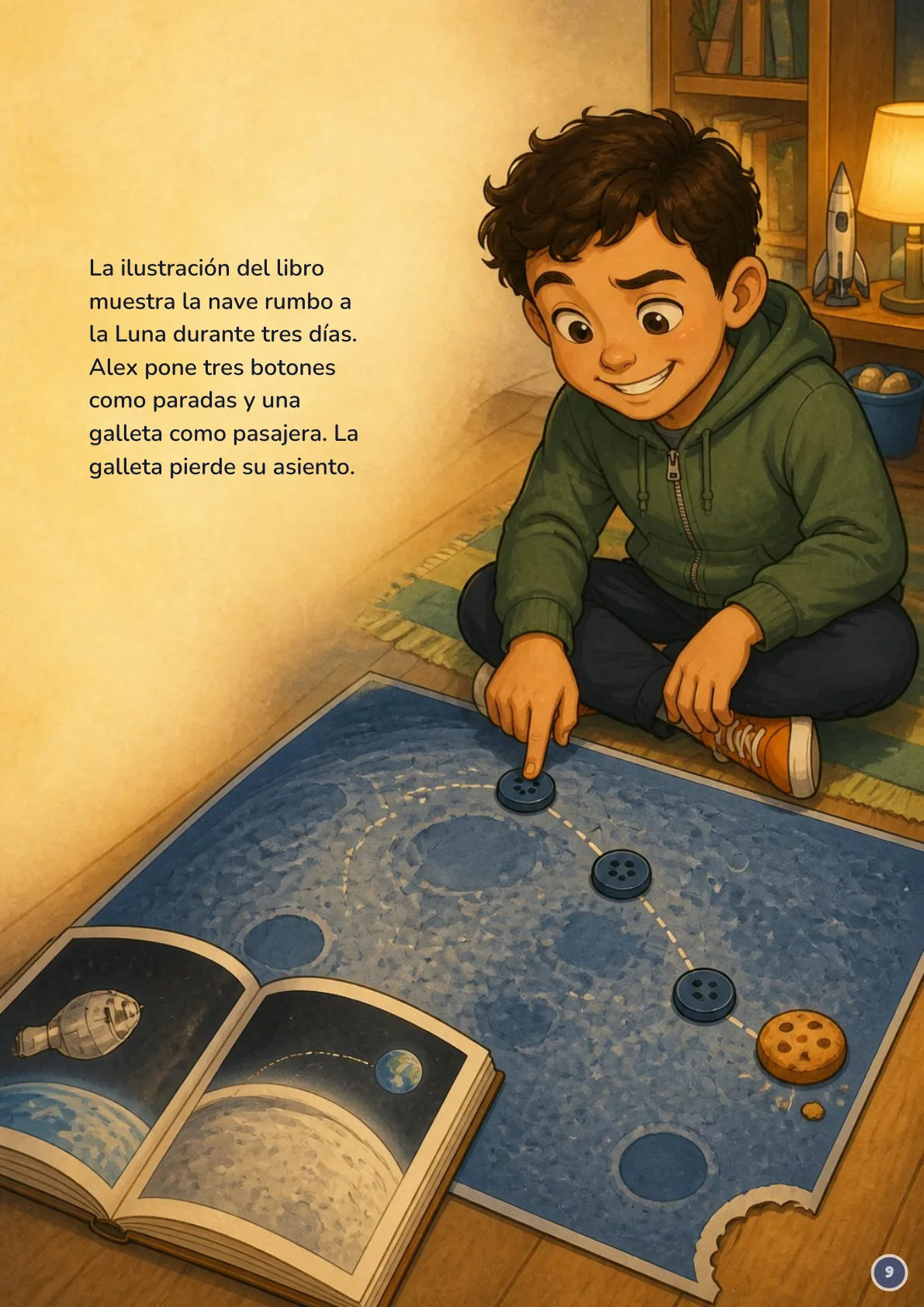
The book’s illustration shows the spacecraft travelling towards the Moon for three days. Alex sets out three buttons as stops and a biscuit as a passenger. The biscuit loses its seat.
Page 10 of 20
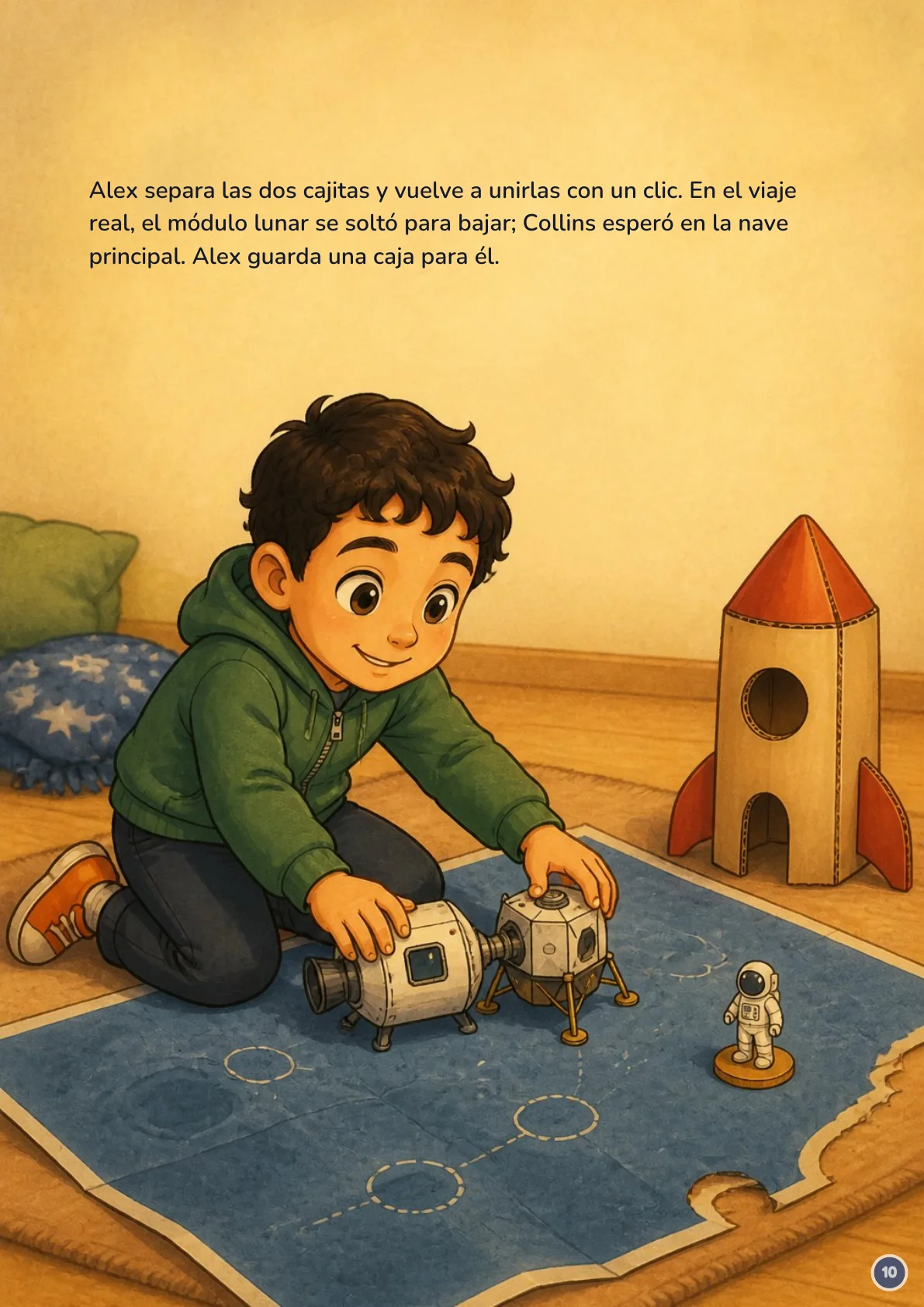
Alex separates the two little boxes, then clicks them back together. On the real journey, the lunar module detached to descend; Collins waited in the main spacecraft. Alex keeps one box for him.
Page 11 of 20
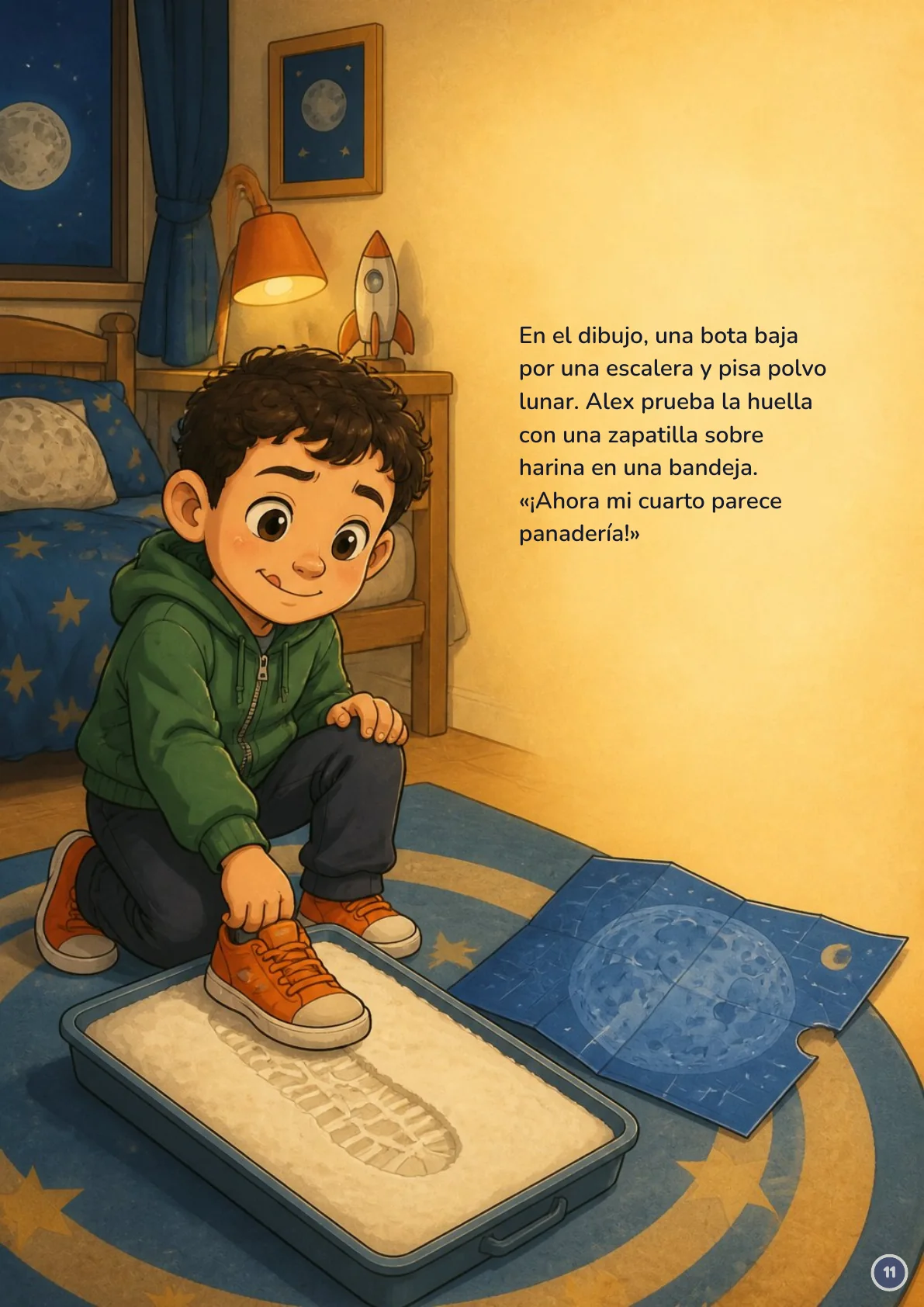
In the drawing, a boot comes down a ladder and steps onto lunar dust. Alex tests the footprint with a slipper in a tray of flour. “Now my room looks like a bakery!”
Page 12 of 20
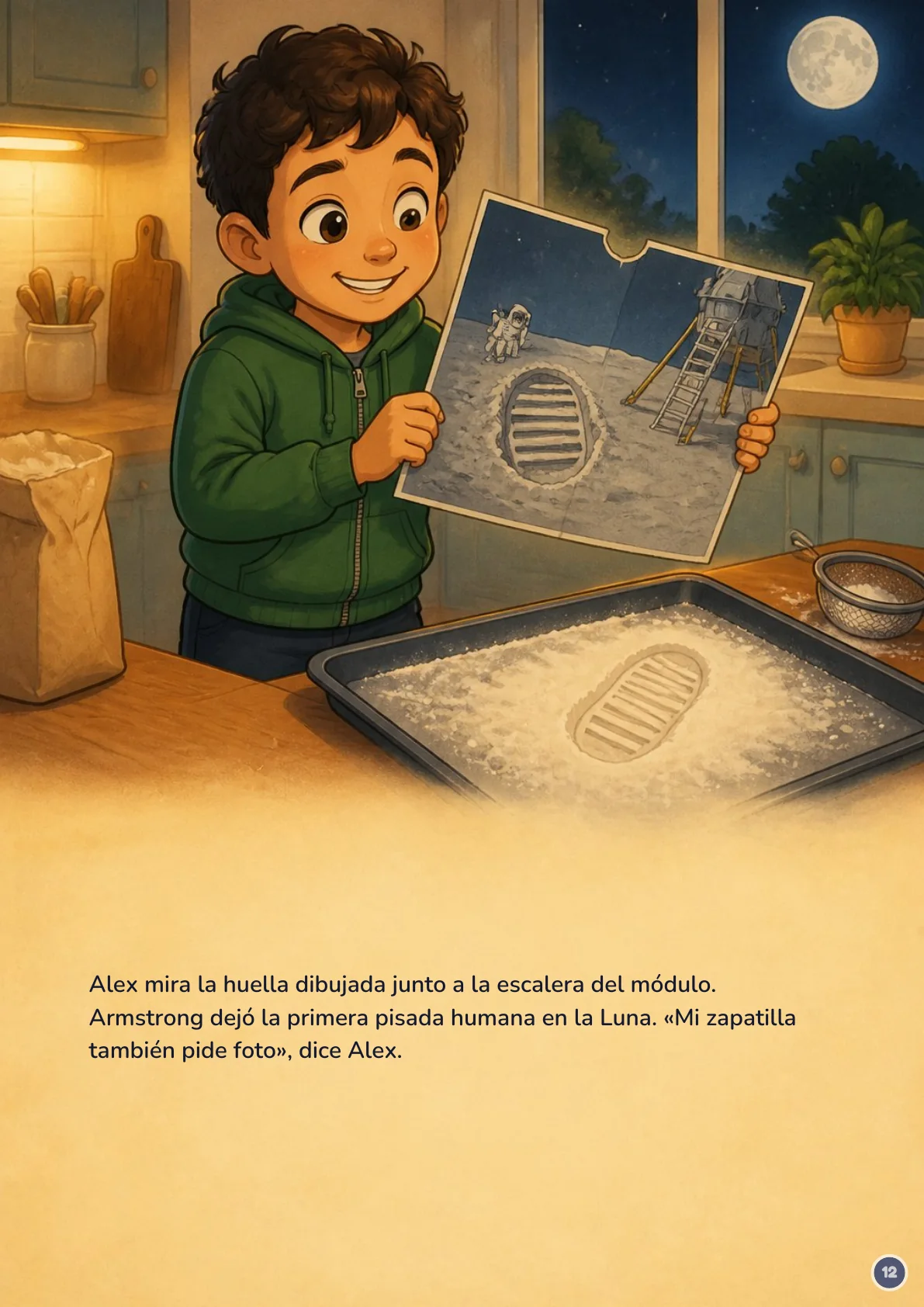
Alex looks at the footprint drawn beside the module’s ladder. Armstrong left the first human footprint on the Moon. “My slipper wants a photo too,” Alex says.
Page 13 of 20
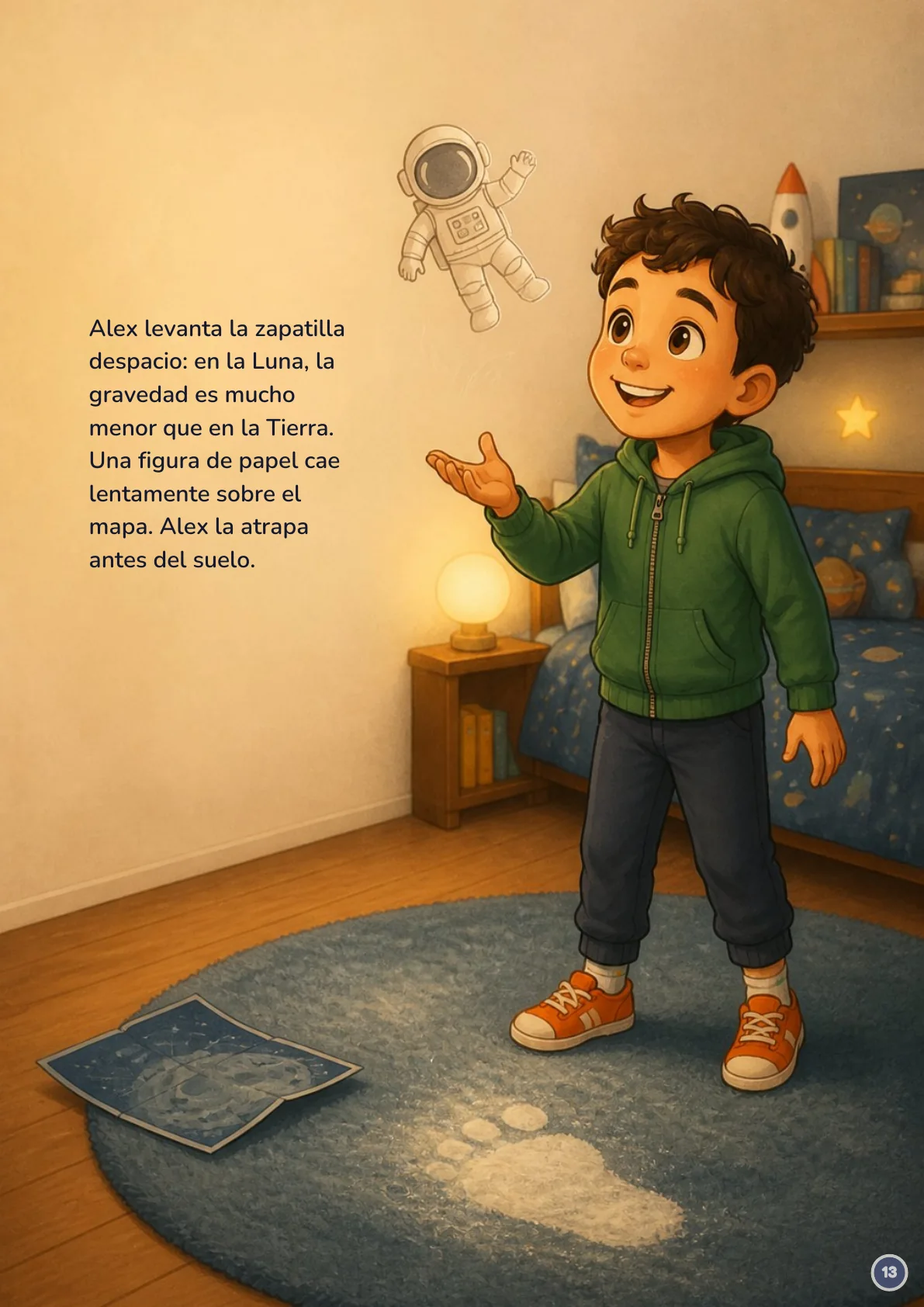
Alex lifts the slipper slowly: gravity on the Moon is much weaker than on Earth. A paper figure falls slowly over the map. Alex catches it before it reaches the floor.
Page 14 of 20
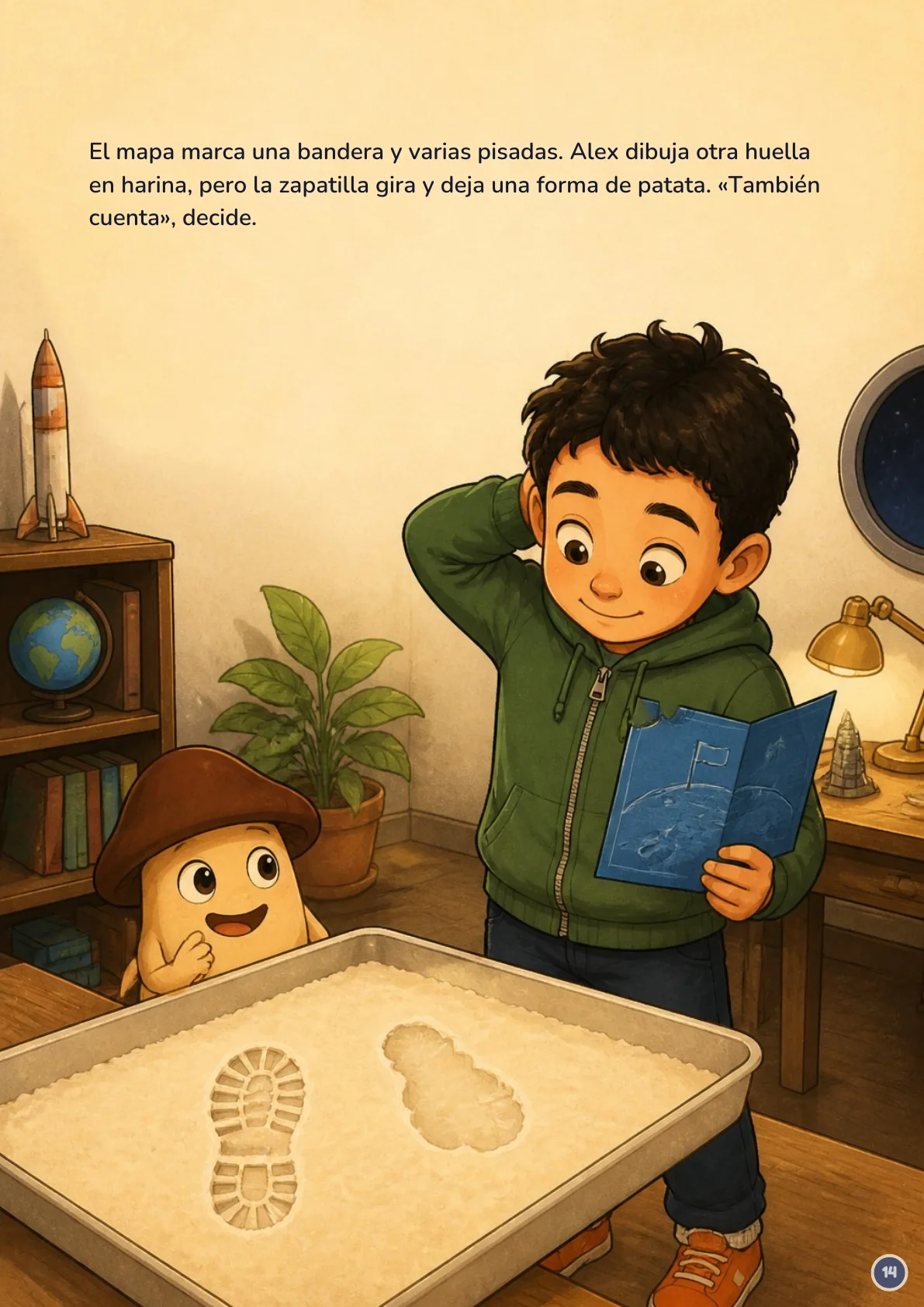
The map marks a flag and several footprints. Alex makes another footprint in the flour, but the slipper twists and leaves a potato shape. “That counts too,” Alex decides.
Page 15 of 20
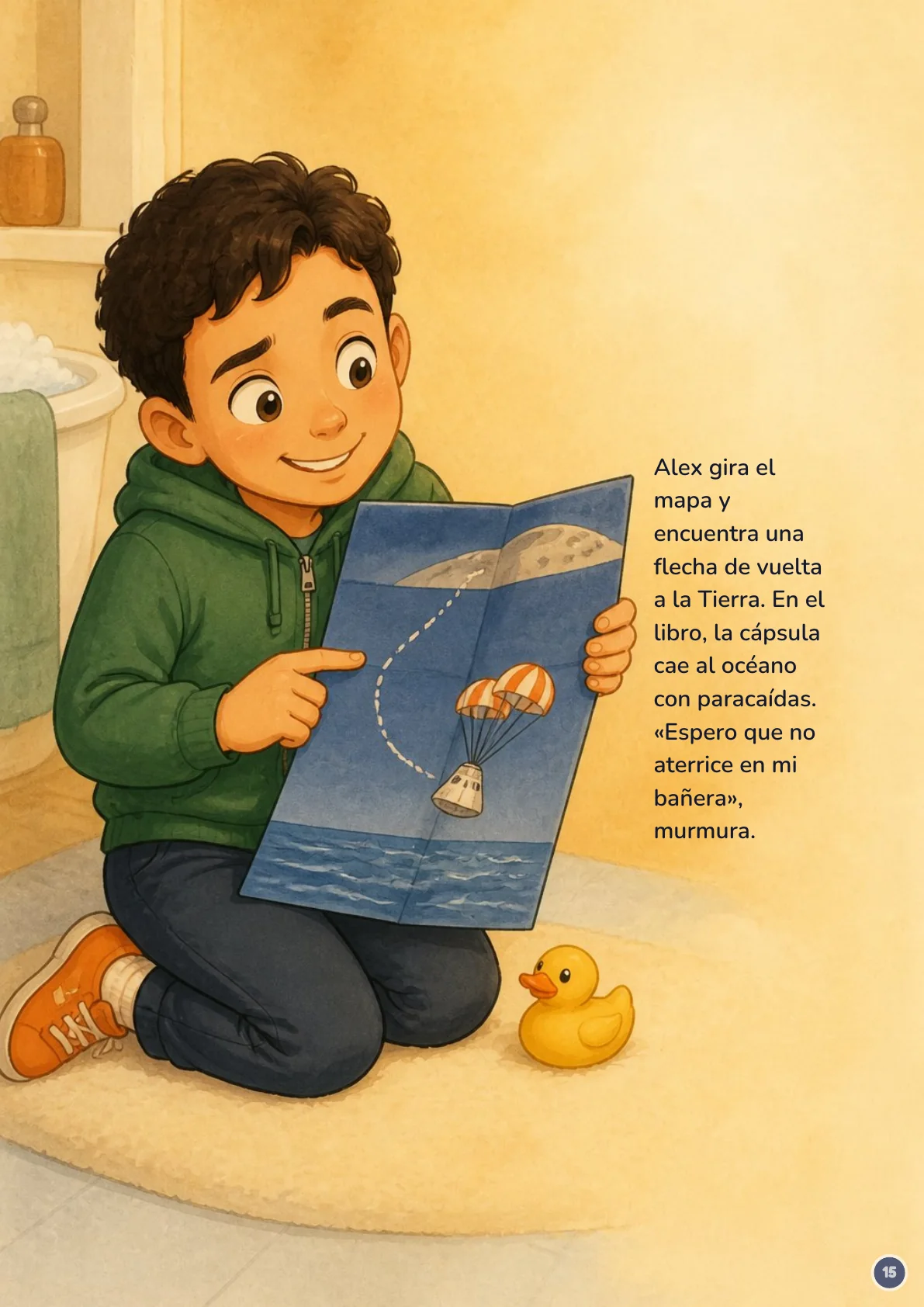
Alex turns the map and finds an arrow pointing back to Earth. In the book, the capsule falls into the ocean with parachutes. “I hope it doesn’t land in my bath,” Alex murmurs.
Page 16 of 20
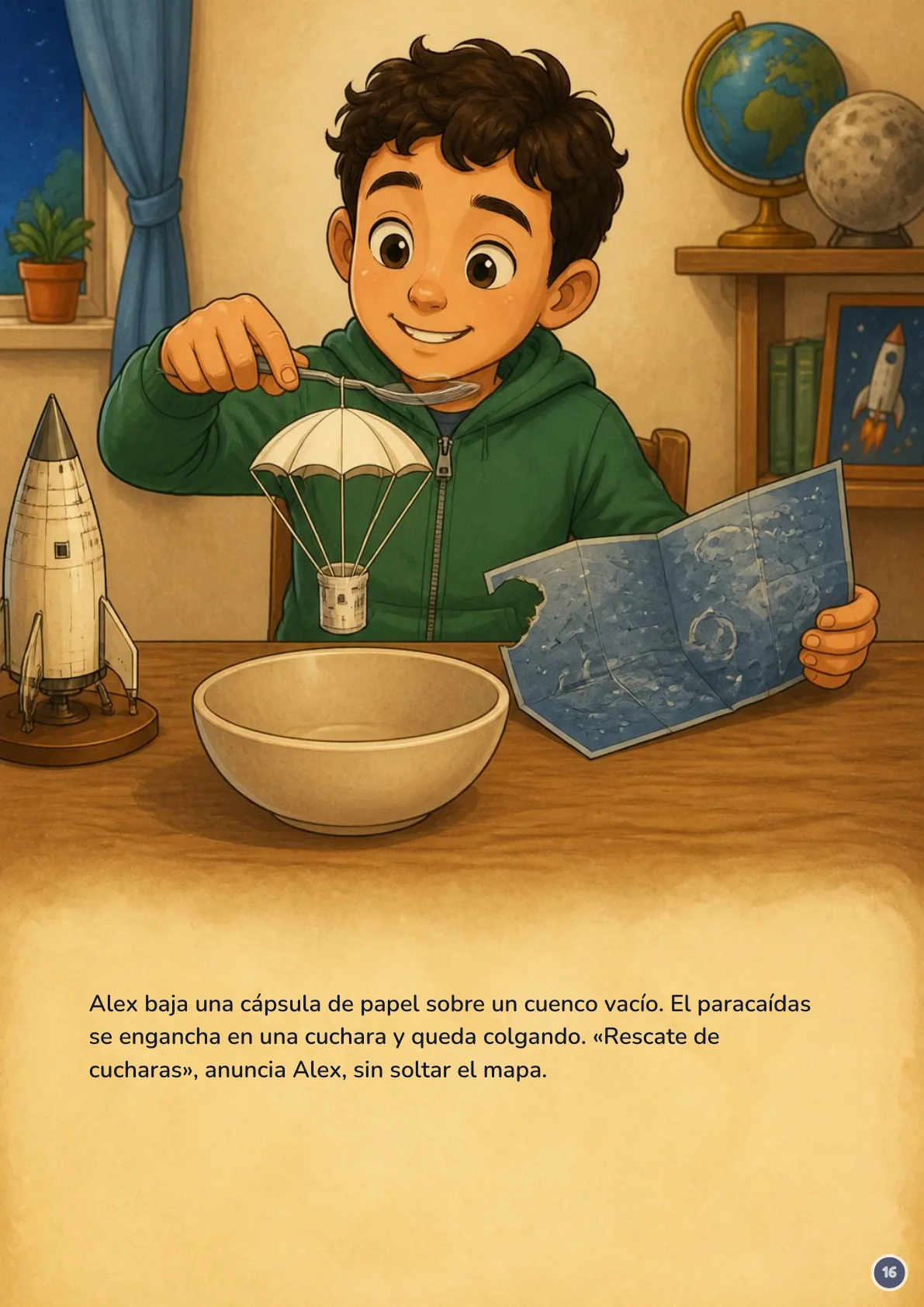
Alex lowers a paper capsule over an empty bowl. The parachute catches on a spoon and hangs there. “Spoon rescue,” Alex announces, still holding the map.
Page 17 of 20
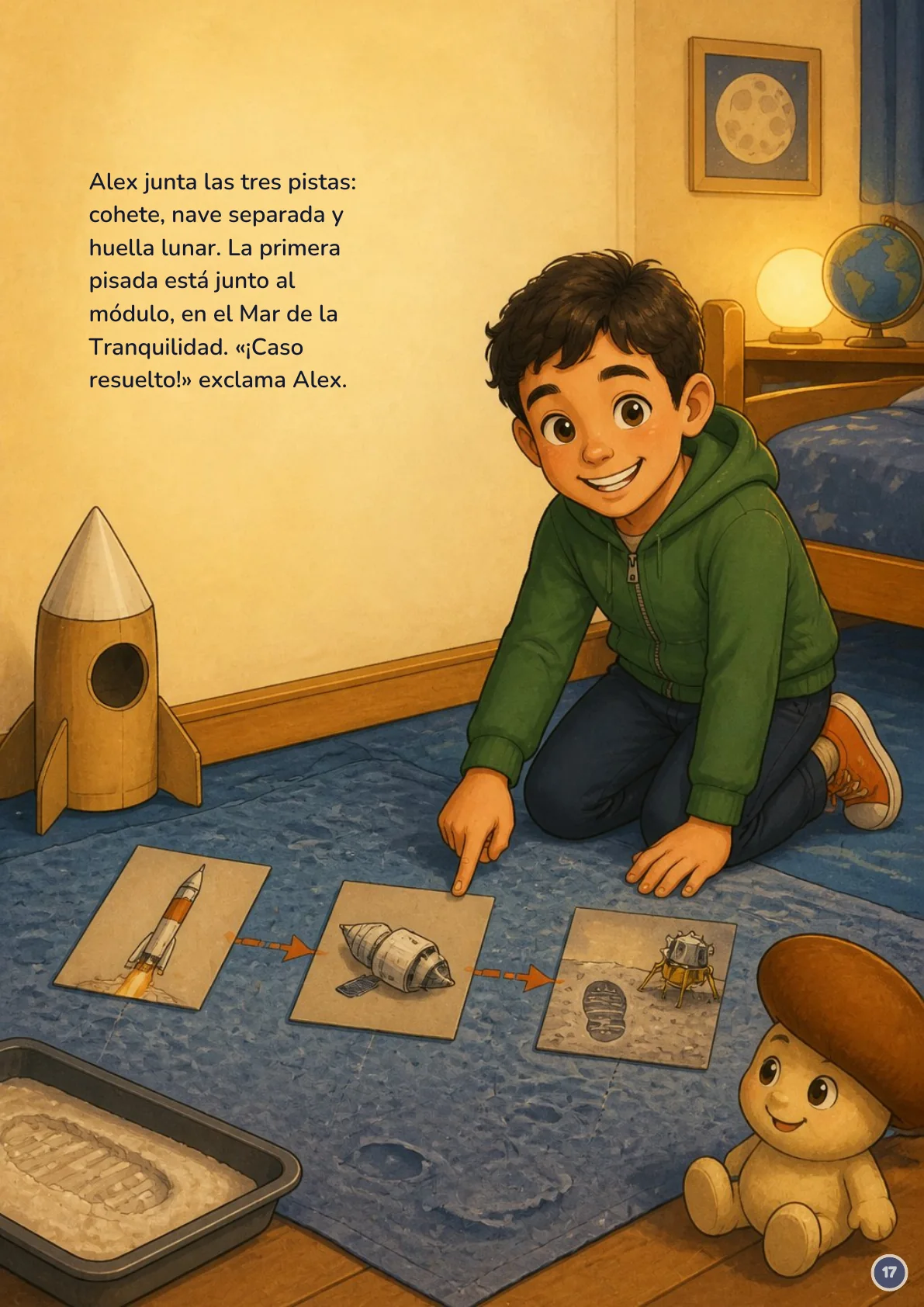
Alex puts the three clues together: rocket, separated spacecraft and lunar footprint. The first footprint is beside the module, in the Sea of Tranquility. “Case solved!” Alex exclaims.
Page 18 of 20
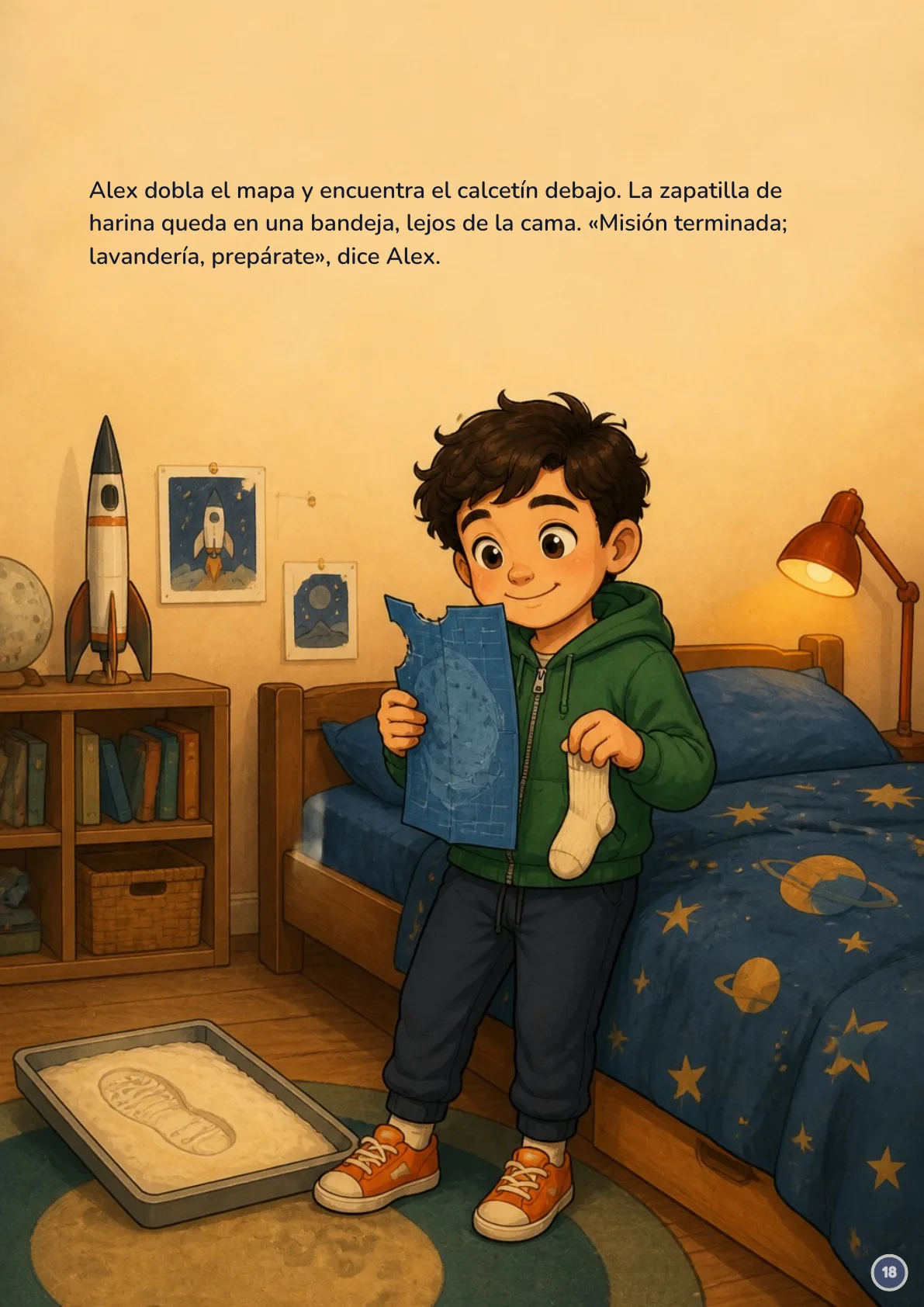
Alex folds the map and finds the sock underneath. The flour-covered slipper stays in a tray, far from the bed. “Mission complete; laundry, get ready,” Alex says.
Page 19 of 20
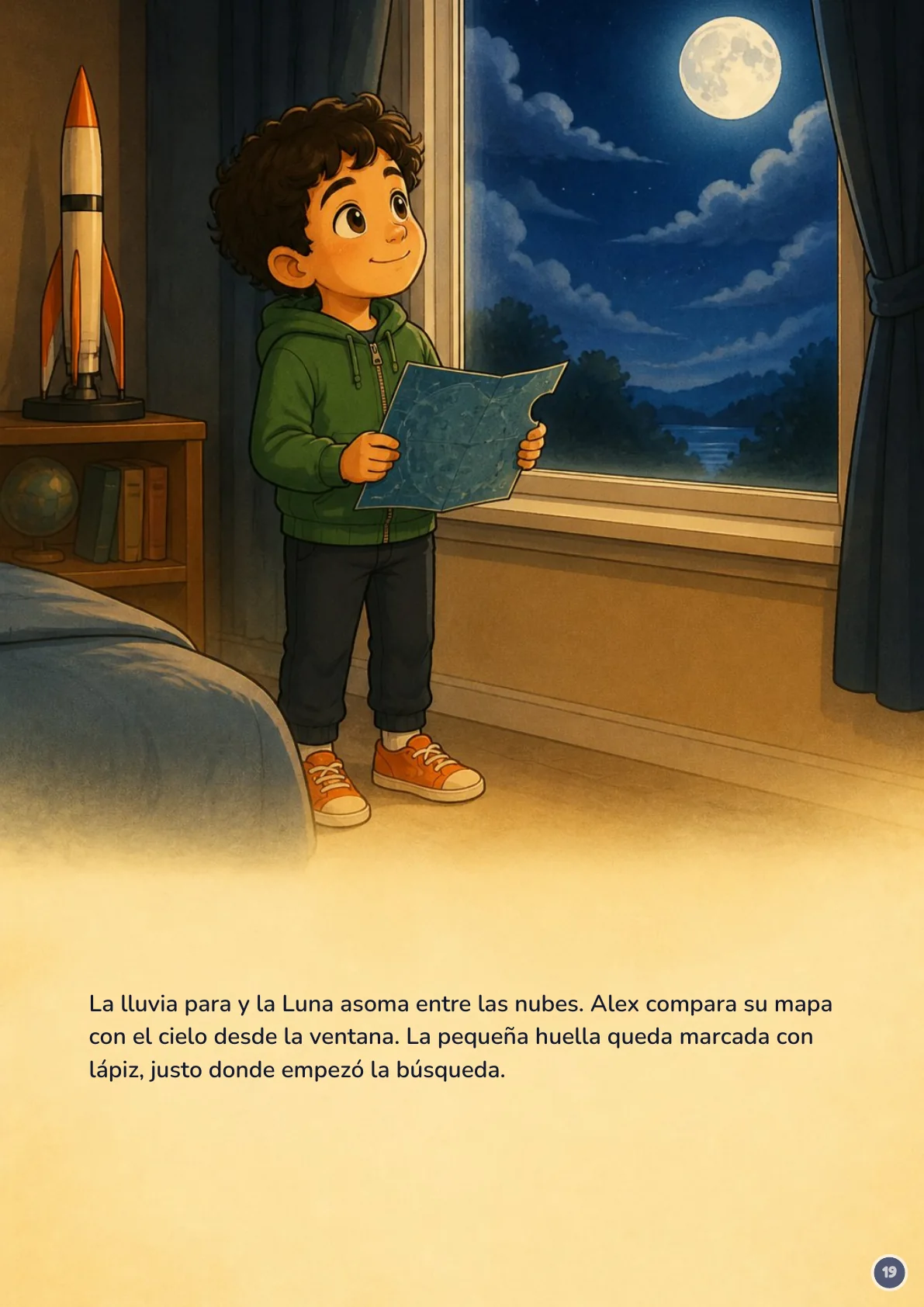
The rain stops and the Moon peeks through the clouds. Alex compares the map with the sky from the window. The little footprint is marked in pencil, right where the search began.
Page 20 of 20
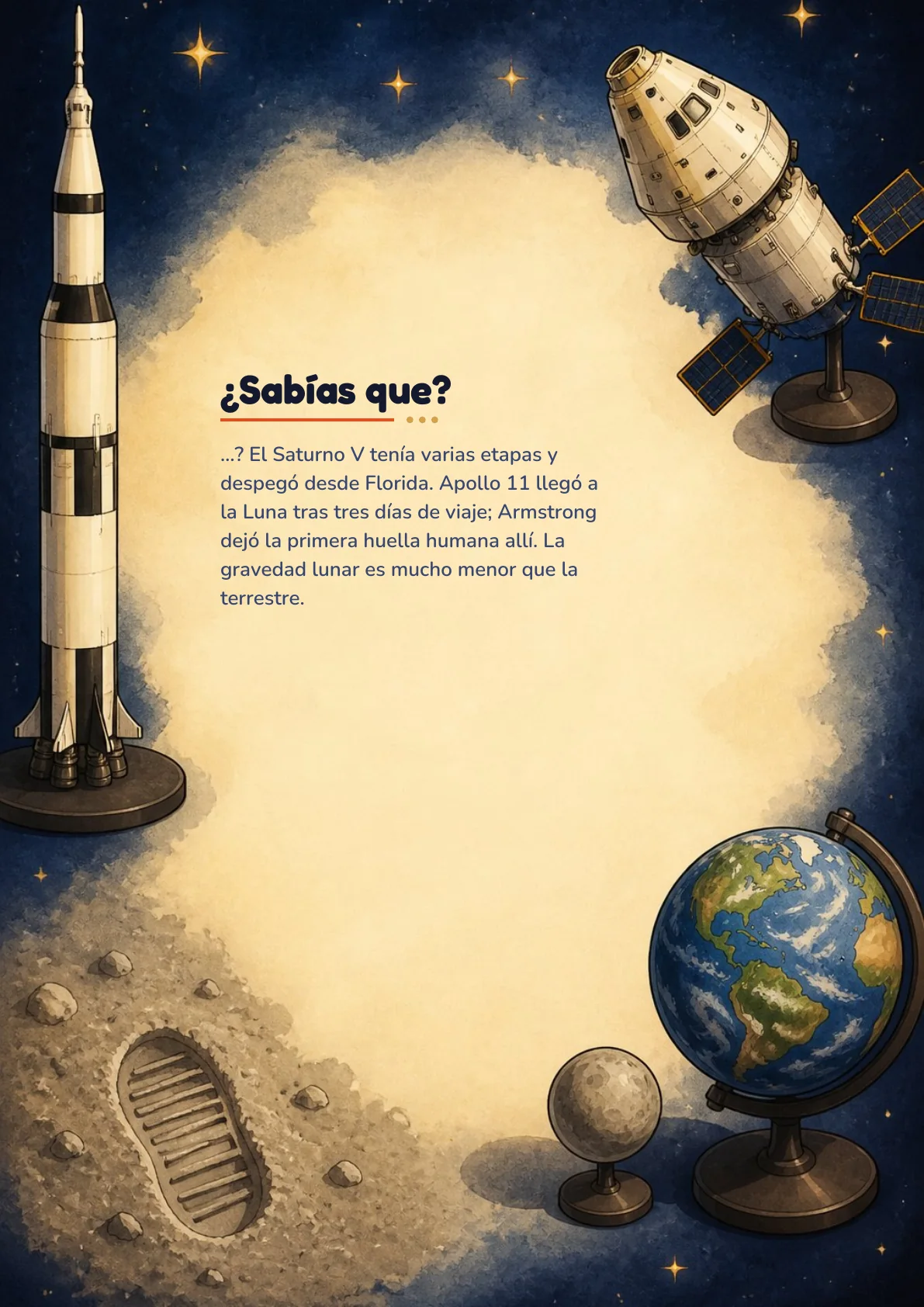
Did you know? The Saturn V had several stages and launched from Florida. Apollo 11 reached the Moon after a three-day journey; Armstrong left the first human footprint there. Lunar gravity is much weaker than Earth’s.